
How to Design a Multi-Functional Living Space
A well-planned living room should support different activities without feeling crowded or uncomfortable. From relaxing with family to working from home or entertaining guests, a flexible layout can make everyday life easier. Modern Home Interior Design in Ahmedabad focuses on combining comfort, functionality, and style to create spaces that suit changing needs.
With thoughtful furniture selection, smart storage, suitable lighting, and a balanced colour scheme, even a compact living room can serve multiple purposes. Here are practical ways to design a multi-functional living space that looks attractive and works well for everyday living.
Top 8 Practical Ways to Design a Multi-Functional Living Space
A well-planned retail store balances product display, customer movement, lighting, and storage. These Modern Retail Store Interior Design Ideas can help businesses use available space effectively while creating a comfortable shopping experience.
1. Understand Your Daily Needs
Before choosing furniture or planning the layout, identify how you use your living room. Every household has different requirements, so the design should reflect your daily routine.
Consider whether your living room is mainly used for family time, entertaining guests, reading, working, or children’s activities. Understanding these needs helps you decide which areas deserve more space.
Things to consider:
- List the main activities that take place in the room.
- Identify which activities happen regularly and which happen occasionally.
- Keep enough open space for comfortable movement.
- Prioritise furniture that supports your most important daily activities.
A clear understanding of your needs creates a strong foundation for functional Interior Design in Ahmedabad, where comfort and efficient use of space are important considerations.
2. Create a Flexible Furniture Layout
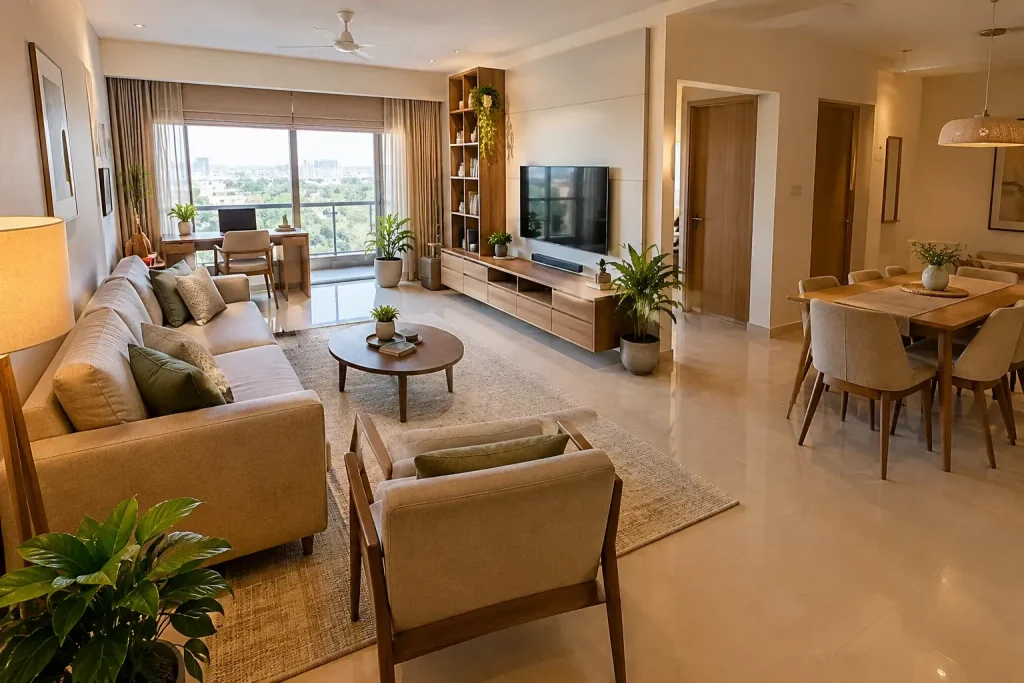
The furniture layout determines how easily you can move between different activities. A well-organized living room should feel open, with clearly defined areas that do not interfere with one another.
Start by measuring the room, including doorways, windows, and passageways. Arrange the main furniture first, then add smaller pieces according to the available space.
A sofa can define the main seating area, while a small desk or reading chair can create a separate functional corner. In an open-plan home, a rug or furniture arrangement can visually separate the living area from the dining or working zone.
Practical layout tips:
- Keep the main walking paths clear.
- Avoid placing oversized furniture in narrow areas.
- Position seating to encourage conversation.
- Use rugs or furniture placement to define different zones.
- Leave enough space to move chairs and open cabinets comfortably.
A flexible layout allows the room to adapt to different activities without requiring major changes every time. An experienced Interior Designer in Ahmedabad can help plan furniture placement according to the room’s dimensions and the household’s requirements.
3. Choose Multi-Purpose Furniture
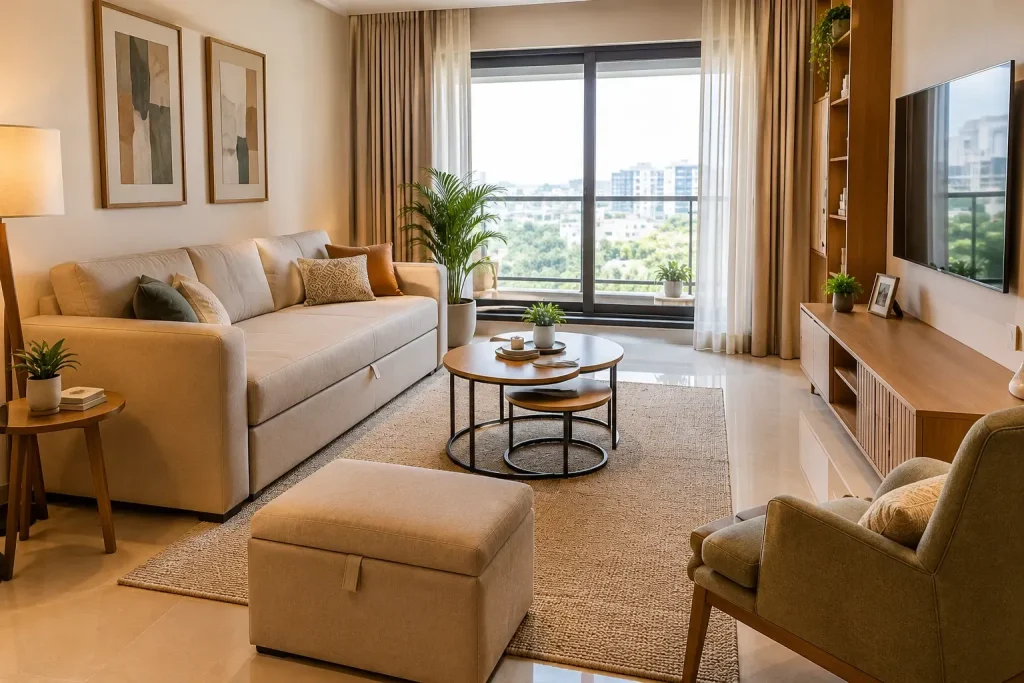
Multi-purpose furniture is useful when one room needs to perform several functions. Instead of filling the space with separate pieces for every activity, choose furniture that serves more than one purpose.
Furniture options to consider:
- Sofa beds: Provide seating during the day and sleeping space when needed.
- Storage ottomans: Offer extra seating and hidden storage.
- Nesting tables: Create additional table space without permanently occupying the floor.
- Extendable tables: Support different activities depending on the available space.
- Compact work desks: Create a practical work area within the living room.
Choose furniture based on comfort, durability, size, and ease of use. Multi-purpose furniture should simplify everyday living rather than introduce unnecessary complexity.
4. Use Smart Storage Solutions
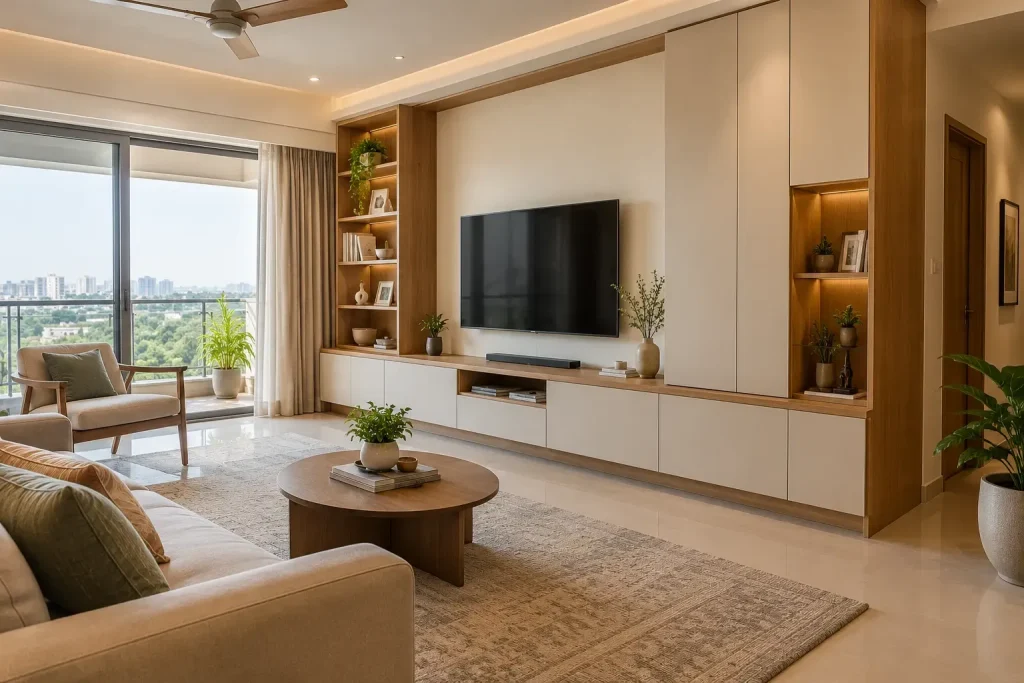
Storage plays an important role in keeping a multi-functional living room organised. When several activities happen in the same space, books, work materials, electronic accessories, toys, and everyday items can quickly create clutter.
A combination of visible and concealed storage can help maintain a clean appearance while keeping frequently used belongings accessible.
Smart storage ideas:
- Use a TV unit with drawers or closed cabinets.
- Install wall-mounted shelves to make better use of vertical space.
- Choose coffee tables with storage compartments.
- Add baskets for blankets, toys, and frequently used items.
- Use built-in cabinets where the room layout allows.
- Keep everyday essentials in designated storage areas.
Avoid adding too many cabinets or shelves simply because storage is needed. The design should balance storage capacity with visual openness.
For smaller homes, a Residential Interior Designer in Ahmedabad can help identify underused corners and plan storage that fits the available floor area without making the room feel crowded.
5. Plan Lighting for Different Activities
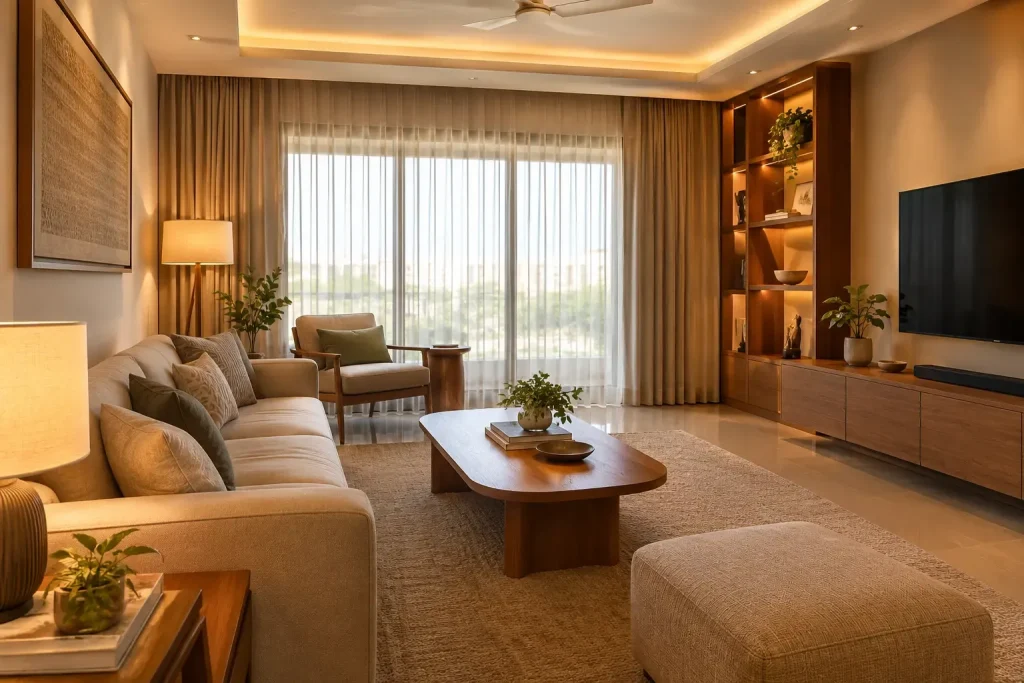
Lighting affects the comfort, appearance, and functionality of a living room. A single ceiling light may provide general illumination, but it may not be suitable for reading, working, watching television, and relaxing.
A layered lighting plan allows different parts of the room to serve different purposes.
Lighting ideas for a flexible living room:
- Ambient lighting: Provides overall illumination through ceiling lights or suitable fixtures.
- Task lighting: Supports focused activities such as reading or working at a desk.
- Accent lighting: Highlights artwork, shelves, or architectural details.
- Natural lighting: Makes the room feel brighter and more welcoming during the day.
Use adjustable lamps or separate lighting controls where practical. This allows you to change the atmosphere without altering the furniture arrangement.
Avoid harsh lighting near television screens and work areas. The right combination of natural and artificial light can make a multi-functional living room comfortable throughout the day.
6. Select Colours, Materials, and Textures Carefully
Colours and materials influence how spacious and cohesive a living room feels. When several activities share one space, a consistent design palette helps the different zones look connected.
Neutral shades such as beige, off-white, warm grey, and soft earthy tones can create a calm background. Wood finishes, textured cushions, rugs, and curtains can add warmth without overwhelming the room.
Design recommendations:
- Use a consistent colour palette across the main furniture pieces.
- Introduce accent colours through cushions, artwork, or decorative accessories.
- Select durable upholstery for frequently used seating.
- Choose easy-to-clean materials when children or pets use the room.
- Combine different textures to create visual interest.
- Avoid using too many contrasting finishes in a compact space.
Materials should suit both the appearance and the practical demands of the household. A carefully balanced combination of colours and textures helps the living room feel inviting while maintaining a unified design.
7. Make Small Living Rooms More Functional
A smaller living room requires careful planning because every piece of furniture affects movement and usability. The goal is not to fit as many items as possible, but to make the available space work efficiently.
Start with the essential furniture and avoid oversized pieces that block pathways or dominate the room. Furniture with raised legs can create a lighter visual effect, while wall-mounted units can free up floor space.
Ideas for compact living rooms:
- Choose appropriately sized sofas and chairs.
- Use wall-mounted shelves instead of bulky storage units.
- Add mirrors where suitable to reflect light and create a sense of openness.
- Select furniture that can be moved or rearranged easily.
- Keep decorative accessories limited and purposeful.
- Use vertical space for storage without overcrowding the walls.
Good planning can make a compact room more useful without sacrificing comfort. A carefully selected layout also ensures that different activities can take place without making the room feel congested.
8. Adapt the Design to Modern Ahmedabad Homes
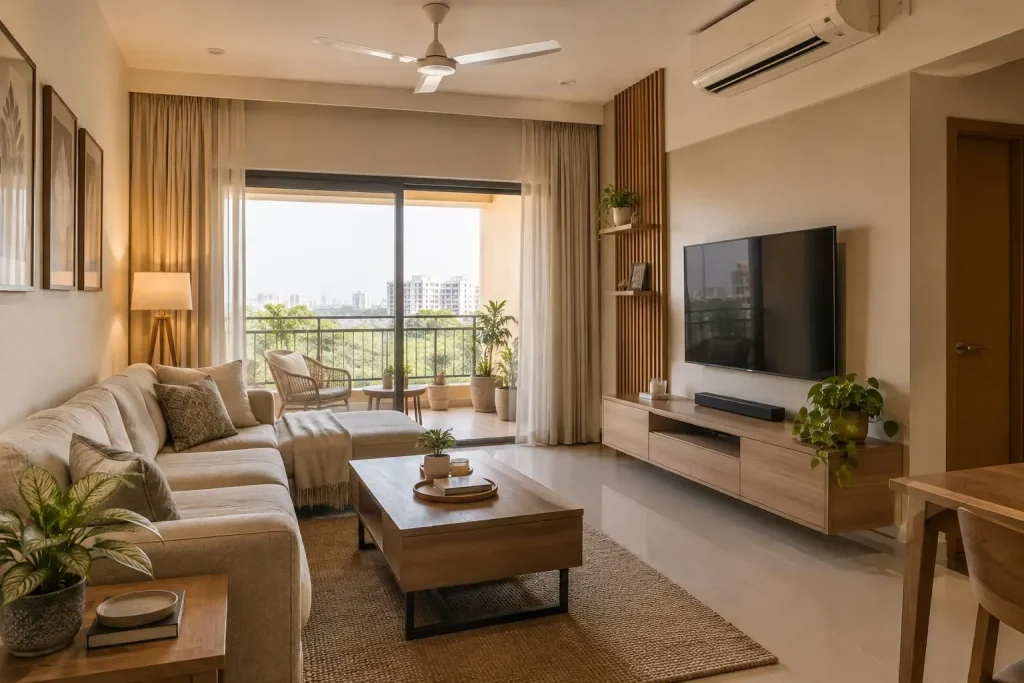
Homes in Ahmedabad can have different layouts, from compact apartments to spacious residential properties. A multi-functional living room should reflect the available space, the household’s lifestyle, and local living requirements.
For apartments, compact furniture, efficient storage, and a clear layout can help maximize usable space. Larger homes may allow more distinct areas for reading, working, entertaining, or relaxing.
Natural light, suitable curtains, comfortable upholstery, and practical materials can also contribute to everyday comfort. Furniture placement should consider windows, ventilation, circulation, and the room’s connection with adjoining areas.
For a practical home interior:
- Choose furniture according to the room’s actual dimensions.
- Consider how the living room connects with the dining area or balcony.
- Use lighting and window treatments to manage daylight comfortably.
- Plan storage around the household’s everyday belongings.
- Keep the design consistent with the rest of the home.
A professional Home Interior Design Company in Ahmedabad can help bring these elements together through a coordinated plan. Whether the home is compact or spacious, the focus should remain on creating a living area that is attractive, comfortable, and easy to use.
Conclusion
Designing a multi-functional living space starts with understanding how the room will be used. A flexible furniture layout, multi-purpose pieces, organized storage, layered lighting, and a consistent colour palette can make everyday activities easier without compromising style.
The best design is not necessarily the one with the most furniture or decorative features. It is the one that uses space thoughtfully and adapts to the needs of the people living there.
FAQs:
A multi-functional living space is a room designed to support more than one activity. It may combine seating, entertainment, reading, working, or occasional sleeping within a single, well-organized area.
Choose appropriately sized furniture, use vertical storage, keep walkways clear, and consider multi-purpose pieces such as storage ottomans or nesting tables. Good lighting and a simple colour palette can also help the room feel more open.
Sofa beds, storage ottomans, nesting tables, extendable tables, and compact desks are useful options. The right choice depends on the room's size and the activities it needs to support.
Professional interior design helps coordinate furniture placement, lighting, storage, materials, and circulation. This can reduce wasted space and create a room that supports everyday activities while maintaining a consistent appearance.