
Designing Restaurants That Guests Remember: Where Ambience Meets Revenue
Restaurant interior design directly impacts revenue by influencing dwell time, average spend, and repeat visits. J Design Studio, a leading interior design company in Ahmedabad, designs F&B spaces that balance guest experience with business performance because the best restaurant design isn’t just beautiful; it’s profitable.
Walk into any successful restaurant in Ahmedabad, from a bustling café on SG Highway to a fine-dining spot in Prahlad Nagar, and you’ll notice something before you notice the menu: the space itself is doing work. Lighting is guiding your mood. Layout is guiding your movement. Every material choice is quietly telling you what to expect from the bill. That’s not accidental. That’s restaurant interior design in Ahmedabad working as a revenue tool.
For restaurant and café owners planning a new outlet or renovation, understanding this connection between ambience and income isn’t optional anymore; it’s the difference between a space guests visit once and one they return to, again and again.
Lighting: The Silent Driver of Dwell Time and Photos
Lighting sets the pace of a meal before a single dish arrives. Warm, dimmed lighting slows guests down, encourages longer conversations, and naturally increases order value. Think dessert, another round of drinks, or a second coffee. Bright, high-energy lighting does the opposite: it speeds up turnover, which works well for quick-service cafés and breakfast spots but can hurt a fine-dining check average.
Lighting also determines whether your food photographs well. In a market where diners share their meals on Instagram before they eat them, flattering, warm-toned lighting isn’t decorative; it’s free marketing that shows up in every guest’s feed. This is a core principle behind effective restaurant ambience design.
Why Lighting Temperature Matters for Different Restaurant Types
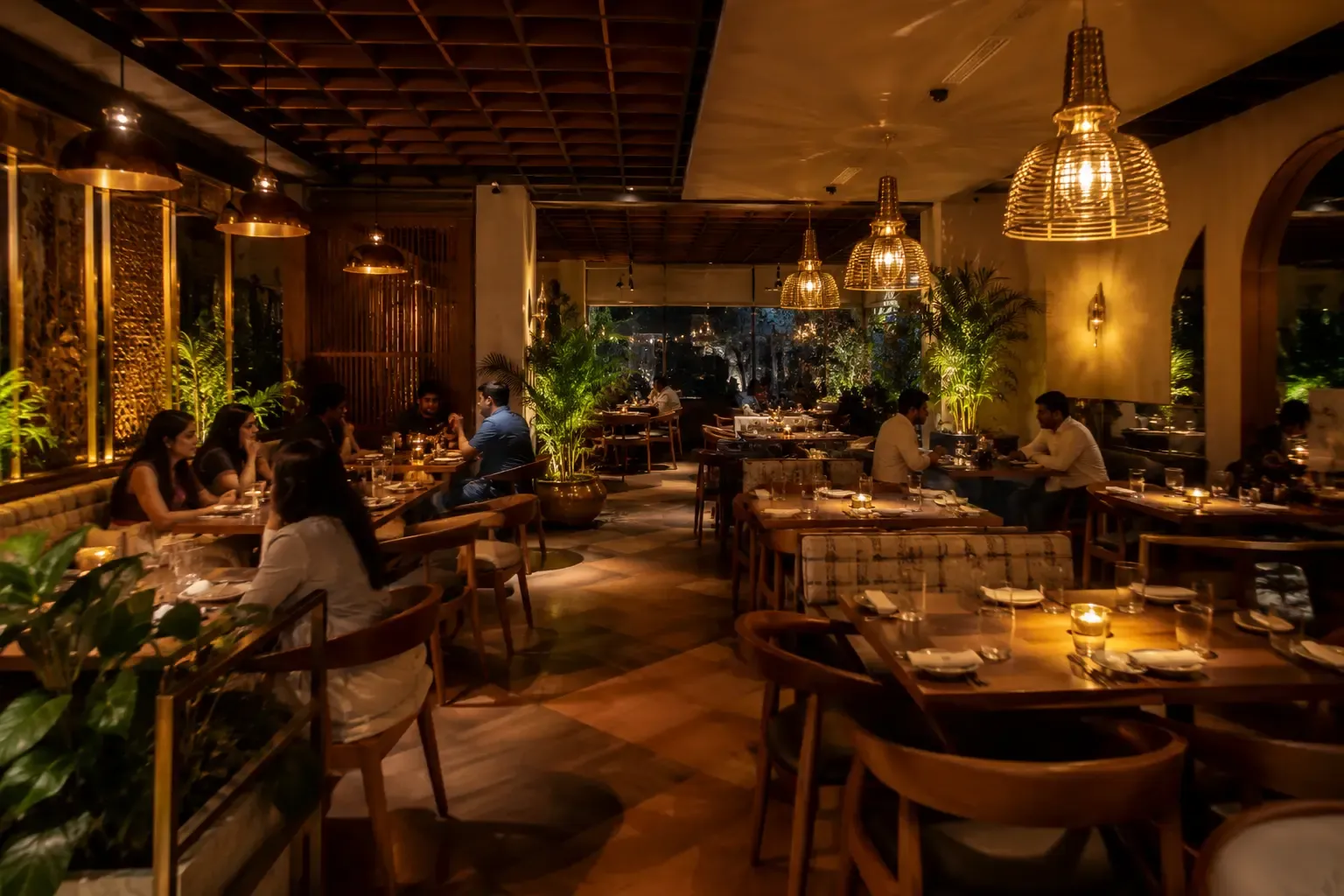
Fine-dining spaces benefit from warmer, dimmer lighting (2700K–3000K) that slows guests down and encourages longer, higher-spend visits. Quick-service cafés perform better with brighter, cooler lighting (3500K–4000K) that keeps energy high and tables turning over efficiently. Matching the lighting temperature to the business model is a simple but often overlooked lever.
Acoustics and Layout: Comfort That Keeps Guests Longer
A restaurant that’s too loud pushes guests out faster, whether the food is good or not. Acoustic planning, soft furnishings, strategic ceiling treatments, and spaced-out seating allow conversation to happen comfortably, which directly extends dwell time and spend per table.
Layout plays an equal role. Guests need to feel they have their own space, even in a tightly packed commercial floor plan. Getting this balance right requires close collaboration with a commercial interior designer in Ahmedabad who understands both guest comfort and the realities of running a profitable floor plan.
Color Palette and Materials: Setting the Price Expectation
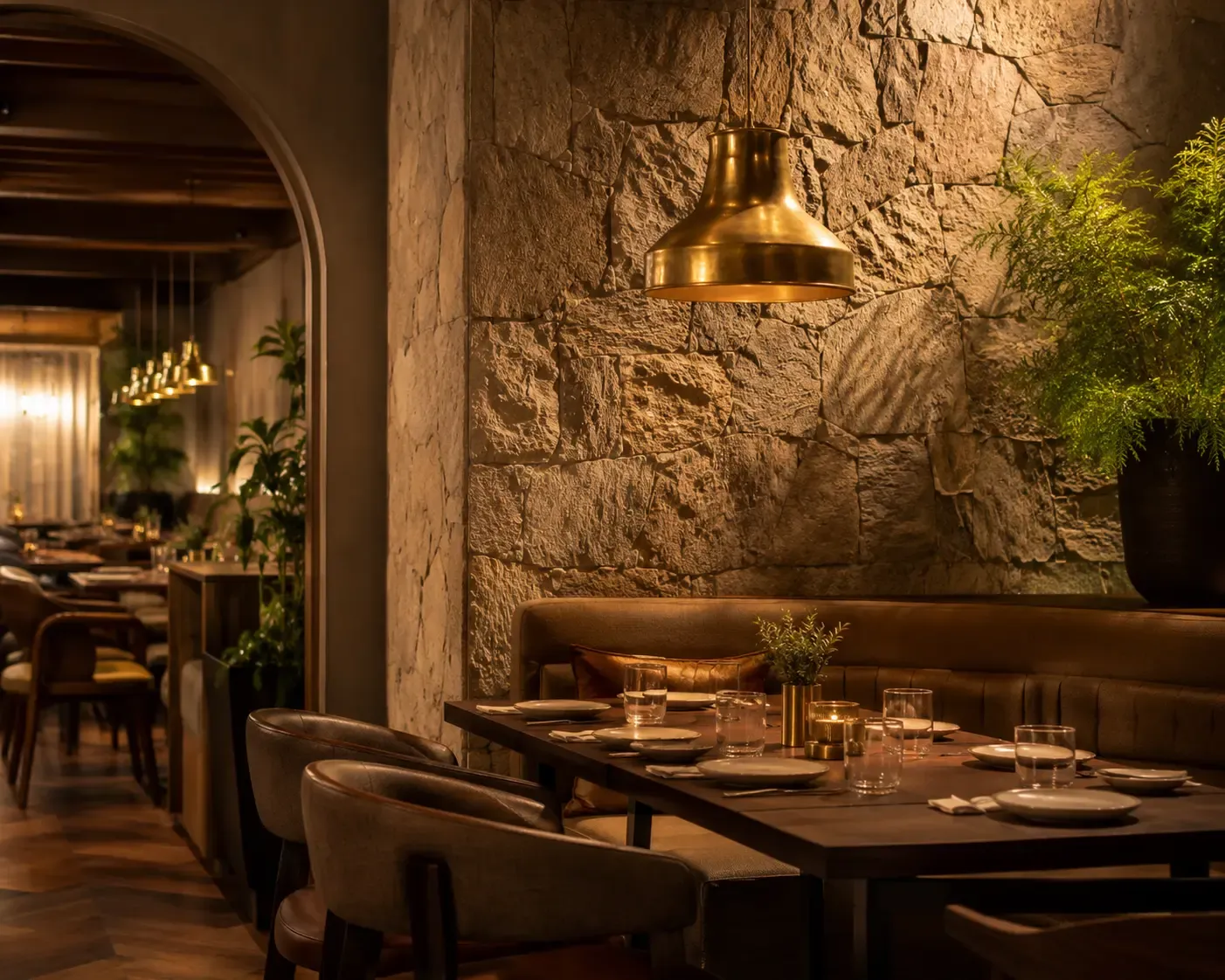
Before a guest reads a single price on the menu, the space has already told them what to expect. Rich textures, natural stone, brass accents, and deep, muted tones signal a premium experience, and guests are psychologically primed to accept premium pricing. Bright colors, exposed materials, and casual textures signal an affordable, high-turnover experience.
Mismatching your interior palette with your actual price point is one of the most common and costly mistakes restaurant owners make. A menu priced for fine dining, served in a space that looks like a quick-service café, creates friction guests can feel even if they can’t name it.
Seating Layout and Flow: Balancing Capacity With Comfort
Every restaurant owner faces the same tension: more tables mean more potential revenue, but overcrowded seating drives guests away and hurts repeat visits. The right seating layout maximizes capacity without guests ever feeling it. This means varied seating types: booths for groups, counter seating for solo diners, and flexible tables that can combine for larger parties planned around actual guest flow, not just square footage on paper.
Signature Moments: Design That Markets Itself
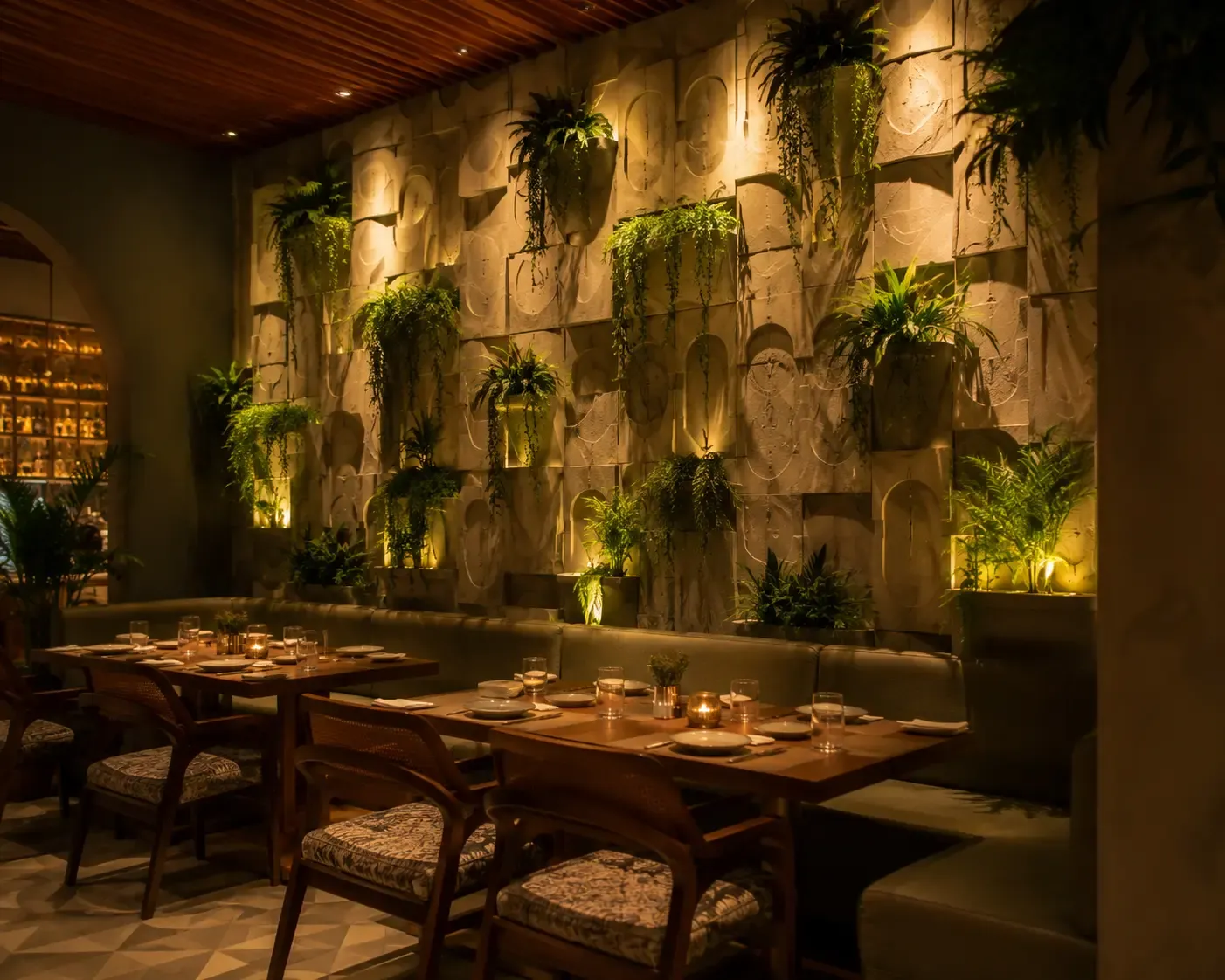
A well-placed “Instagrammable” corner, a striking wall, or a distinctive bar backdrop does something a paid ad cannot: it turns guests into your marketing team. These signature design moments don’t need to dominate the space; even one intentional feature wall or lighting installation can generate consistent organic reach, especially in a market where hospitality trends spread quickly through social sharing in cities like Ahmedabad.
Sensory Details: What Makes a Restaurant Memorable
Scent, texture, and even the weight of cutlery in a guest’s hand all contribute to how memorable a space feels. These details are easy to overlook and expensive to retrofit later, which is why they need to be part of the design conversation from day one — not an afterthought after construction is complete.
A Quick Illustration
Consider a hypothetical mid-sized café in Bopal struggling with high foot traffic but low average spend. A redesign focused on three changes—warmer lighting near seating clusters, an acoustic-friendly ceiling treatment, and one signature design wall near the entrance—can shift guest behavior measurably: longer average visit times, higher add-on orders, and a visible increase in social media tags. This is the kind of outcome thoughtful restaurant design ideas in Ahmedabad are built to produce.
How J Design Studio Approaches Restaurant Design
At J Design Studio, restaurant design starts with the brand, not the floor plan. Before any layout is drawn, the process begins with understanding what the restaurant wants guests to feel casual and fast, or slow and indulgent—and mapping the entire guest journey from entrance to exit around that feeling.
From there, material and lighting choices are made with budget realities in mind, not just aesthetic ideals, ensuring the final space is both striking and financially sustainable to build and maintain. With hands-on experience designing F&B and commercial spaces across Ahmedabad’s growing hospitality scene, from SG Highway to Satellite and Prahlad Nagar, the studio understands both the design language guests respond to and the operational realities restaurant owners live with daily, making it a trusted hospitality interior design company in Ahmedabad.
If you’re exploring a broader commercial space beyond F&B, our commercial interior design services follow the same guest-experience-driven approach. You can also browse our completed work on the portfolio page.
FAQs:
Interior design affects revenue by influencing how long guests stay, how much they order, and whether they return. Lighting, acoustics, and layout directly shape guest comfort and spending behavior, making design a measurable business investment rather than just a visual choice.
Costs vary widely based on restaurant size, material quality, and scope of work, ranging from budget-conscious café fit-outs to premium fine-dining builds. J Design Studio provides a customized quote after understanding your space, brand, and business goals.
Timelines typically range from 6 to 16 weeks depending on the size of the space, complexity of design, and extent of civil or structural work involved. A detailed timeline is shared upfront during the planning phase.
Comfortable acoustics, flattering lighting, distinctive signature design moments, and a layout that doesn't feel crowded are the strongest drivers of repeat visits. Guests return to spaces where they felt comfortable and where the experience matched what they were promised.
Yes, J Design Studio works across the F&B spectrum, from casual cafe interior design in Ahmedabad to premium dining spaces, adapting the design approach to match each concept's brand positioning and target guest experience.